


Knee pain in gonarthrosis is often the most unpleasant part of the diagnosis: it limits movement, disrupts sleep, and gradually "shrinks" everyday life to steps that we carefully consider. Many people end up asking: "Is there anything else that can help, without relying solely on painkillers?"„
Collagen supplements are among the most frequently discussed options. In recent years, data has accumulated not only from single studies but also from more general analyses. This article brings together findings from a new Spanish 6-month study and other research.
Gonarthrosis is irreversible, but it can be controlled.
Gonarthrosis (osteoarthritis of the knee) is a chronic degenerative condition in which the articular cartilage gradually wears away. In the classical sense, the disease is not „reversible“. There is no proven approach that can reliably return the cartilage to its original state in already developed osteoarthritis. Do not waste your time with „folk“ methods, often passed on by word of mouth, without anyone having actually achieved success with them.
The good news is that in many people, gonarthrosis can be controlled. The pain decreases, the movement of the knee improves, the need for painkillers decreases and the progression slows down. Collagen is one of the supplements being studied because it is an important component of cartilage, tendons, etc. You should not have excessive expectations - it can be a supplement to the main measures, not a replacement. However, the combined approach - drugs, collagen, movements and proper nutrition are most effective.
What did the 6-month study with collagen + vitamin C show?
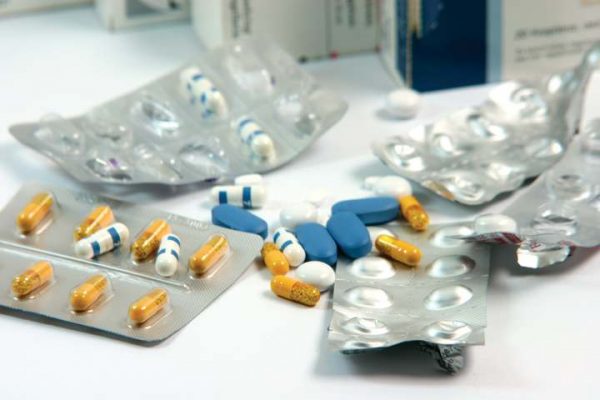
In a randomized, double-blind study from Spain in people with moderate gonarthrosis (grade II–III) Participants received either 10 g of hydrolyzed collagen + 80 mg of vitamin C daily or placebo for 6 months. The results were clearly in favor of collagen: significant pain reduction, better knee function (measured by the Lequesne index) and a significant decrease in inflammatory markers (CRP and ESR) compared to placebo.
This is an important „puzzle“ because it combines symptoms (pain/function) and biomarkers of inflammation, suggesting that the effect may not be solely subjective.
Look more: A new approach to surgical treatment of gonarthrosis
New methods help treat bone spurs (osteophytes)
Previous studies and summary analyses confirm the benefit
A single study is rarely enough. It is more convincing when several independent studies show a similar direction of effect.
1) Meta-analyses: what do the „pooled“ data say?
Has been published meta-analysis, which concludes that Oral collagen intake improves pain and functional outcomes in osteoarthritis (incl. knee), the effect being statistically and clinically significant in the summary results.
Another more recent analysis (with a focus on „collagen derivatives“ and more rigorous methods such as trial sequential analysis) also reported evidence of efficacy and safety in osteoarthritis, albeit with the usual caveats of study quality and heterogeneity.
How to put it more simply? The summarized data support the thesis that in some people collagen can reduce pain and improve function, but it does not promise a miracle and does not prove that it "stops" osteoarthritis.

2) New randomized trials in gonarthrosis
In 2025, a randomized, double-blind, placebo-controlled trial of low-molecular-weight collagen peptides in gonarthrosis was published, reporting benefits in terms of symptoms and safety compared to placebo.
There is also a published study that looks at a combination of undenatured type II collagen (UC-II) and hydrolyzed collagen in patients with gonarthrosis (i.e., comparing/evaluating a combination approach in a popular „real-world“ supplementation scenario).
3) Undenatured type II collagen (UC-II): different mechanism, different dosage
In addition to „peptides“ (hydrolyzed collagen), there are supplements with undenatured type II collagen (UC-II), derived from cartilage, that are being tested in knee osteoarthritis. Randomized controlled trials have been published, including comparisons with placebo and with glucosamine/chondroitin, with reported improvements in symptoms in a proportion of patients.
This doesn't mean that UC-II is "better" than peptides - it means that there is more than one type of collagen that has actually been studied.
What is the „realistic“ effect that a patient might be looking for?
From the available data, three types of benefits are most consistently repeated:
- Pain reduction (especially when walking/exerting weight).
- Feature improvement (better endurance, less limitation in daily life).
- Possible reduction in inflammatory markers in some protocols (as in the 6-month vitamin C study).
What no has been convincingly proven: that collagen „restores cartilage“ or „stops osteoarthritis.“ Many supplements use such wording, but clinical data usually supports a symptomatic effect, not a „reversal“ of the disease.
If you want to try it: how to do it wisely (and safely)
Collagen makes sense to consider as sample plan, rather than as a promise. Commonly studied schemes include:
- Hydrolyzed collagen/collagen peptides – often around 10 g daily in clinical protocols, with a period of 3 to 6 months for evaluation.
- UC-II (undenatured type II) – the doses in supplements are much lower (due to a different mechanism), and there is data from randomized studies in the knee.
A practical rule for patients: if after 8–12 weeks there is no difference in pain/function, the chance that it is „your“ supplement decreases. If there is a clear benefit, it makes sense to discuss continuing with your doctor.
Safety: in most studies, collagen products are described as well tolerated, but this does not negate the individual risks (allergies to the source - fish/beef/chicken cartilage, stomach discomfort, interactions with specific conditions).
Most importantly: the supplement works best when it steps on the foundation
If collagen is the „roof“, the foundation remains: movement, strengthening the muscles around the knee, weight control (if necessary), physiotherapy, optimal pain relief and load adjustment. Collagen may be that supplement that helps you move with less pain – and movement, in turn, is one of the strongest „medicines“ for function in gonarthrosis. Yes – there is more than one study and there are meta-analyses that generally support a moderate but real symptomatic effect of collagen supplements in gonarthrosis in some patients.
But the expectation must be correct: gonarthrosis is not „reversed,“ but controlled. If collagen helps, you will most often feel it as: less pain when walking, more ease in everyday life, and potentially less need for painkillers – within a reasonable, comprehensive plan.
Editor Ina Dimitrova
 EN
EN  BG
BG  DE
DE  SR
SR  RO
RO  EL
EL  RU
RU  IT
IT  ES
ES  PT
PT  FR
FR  PL
PL 